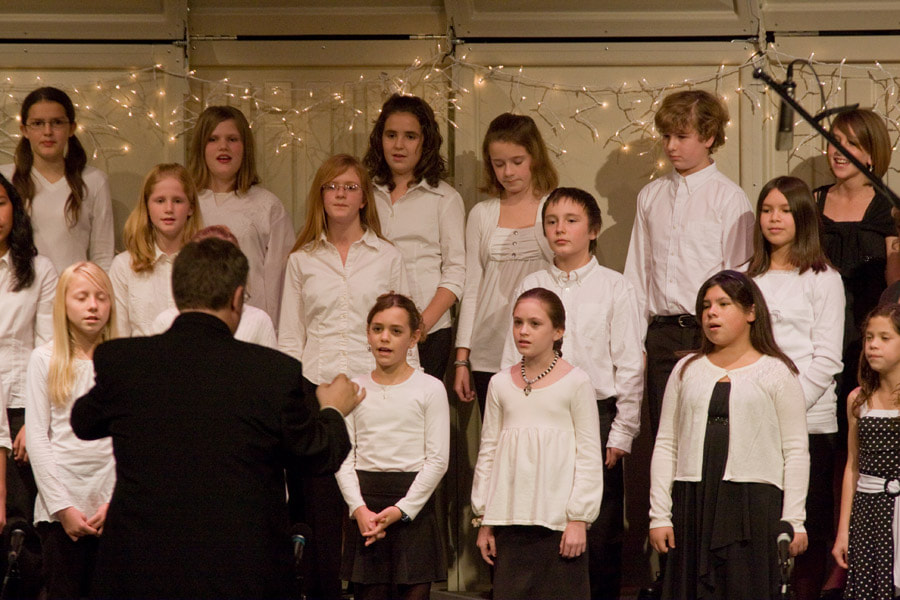
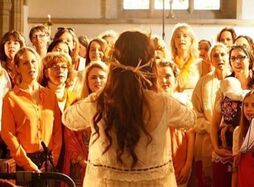
 Conductor giving clean cut-off
 Most choral conductors try to get to the point in rehearsals where they can suggest (and hope to get) good PHRASING from their choir. Sadly, this aspect of singing takes a long time to master. Many willing Ward Choir singers are just regular folk who happen to like to sing. They probably have never had lessons to improve their voices. They likely have never had the opportunity to actually hear their own voices. They might not really understand what PHRASING is or why it is important.
Good singing is made up of so many techniques such as POSTURE, BREATHING, PITCH, DICTION, TONE, RHYTHM, BALANCE, BLEND, and the list goes on. Choir directors have to choose their battles when preparing their groups for performance. At first they have to make sure the singers know their PITCHES. They might work on standing up straight to improve POSTURE and BREATHING. They might encourage memorization of the words and do a few tricks to help with DICTION such as singing on the VOWEL and getting clean CUT-OFFS. He might even ask for the group to follow the DYNAMICS (the louds and softs) as marked in the music.
And then they run out of rehearsal time. The Performance comes and goes, just like that. On to the next project.
Getting to the good stuff like PHRASING might always be just out of reach. PHRASING happens when all of those other techniques are already in place and then the musicality and interpretation can begin.
As a singer, especially when singing in a language I really didn't understand, I learned to trust the composer. When in doubt of the message in the text, I could follow the musical setting the composer created. The composer did the work of interpretation through his music. All I really needed to do was trust his judgement. If the music gave dynamics, and slurs, and crescendo/diminuendo marks, I followed them. Those were the indications for PHRASING.
For a Ward Choir Director, getting his group to intuitively add musicality and PHRASING may be long in coming, but it can come. Just try adding nuances a little at a time or choose music that lends itself to including PHRASING from the get-go.
You might even record the group during rehearsal. Let them hear themselves and be the judges of whether they are singing with good PHRASING.
In an effort to record some of my own arrangements, I have tried multi-track recording. There are built-in problems with singing with yourself. Getting the feeling and interpretations right is nothing like what you can do in a group. It is definitely not the same result as having a conductor pull out a performance from the group all watching and feeling together!
"Love at Home" for SSAA, Piano and 2 flutes.
Good singing is made up of so many techniques such as POSTURE, BREATHING, PITCH, DICTION, TONE, RHYTHM, BALANCE, BLEND, and the list goes on. Choir directors have to choose their battles when preparing their groups for performance. At first they have to make sure the singers know their PITCHES. They might work on standing up straight to improve POSTURE and BREATHING. They might encourage memorization of the words and do a few tricks to help with DICTION such as singing on the VOWEL and getting clean CUT-OFFS. He might even ask for the group to follow the DYNAMICS (the louds and softs) as marked in the music.
And then they run out of rehearsal time. The Performance comes and goes, just like that. On to the next project.
Getting to the good stuff like PHRASING might always be just out of reach. PHRASING happens when all of those other techniques are already in place and then the musicality and interpretation can begin.
As a singer, especially when singing in a language I really didn't understand, I learned to trust the composer. When in doubt of the message in the text, I could follow the musical setting the composer created. The composer did the work of interpretation through his music. All I really needed to do was trust his judgement. If the music gave dynamics, and slurs, and crescendo/diminuendo marks, I followed them. Those were the indications for PHRASING.
For a Ward Choir Director, getting his group to intuitively add musicality and PHRASING may be long in coming, but it can come. Just try adding nuances a little at a time or choose music that lends itself to including PHRASING from the get-go.
You might even record the group during rehearsal. Let them hear themselves and be the judges of whether they are singing with good PHRASING.
In an effort to record some of my own arrangements, I have tried multi-track recording. There are built-in problems with singing with yourself. Getting the feeling and interpretations right is nothing like what you can do in a group. It is definitely not the same result as having a conductor pull out a performance from the group all watching and feeling together!
"Love at Home" for SSAA, Piano and 2 flutes.

 RSS Feed